

When May IV Therapy Be Considered?
At Universal Urgent Care, our team evaluates each individual’s symptoms, hydration needs, and overall health before determining whether IV therapy may be appropriate. IV therapy may be considered when fluid replacement or supportive care is needed due to dehydration, illness, vomiting, diarrhea, or difficulty drinking enough fluids. Our team provides careful assessment and personalized guidance to support safe, timely, and appropriate care. We also review relevant medical history and current concerns to determine the most suitable approach. Our goal is to help individuals understand when IV therapy may support their recovery and overall well-being. For more information, contact us today or book an appointment. We are conveniently located at 2728 Ming Ave, Bakersfield, CA 93304.
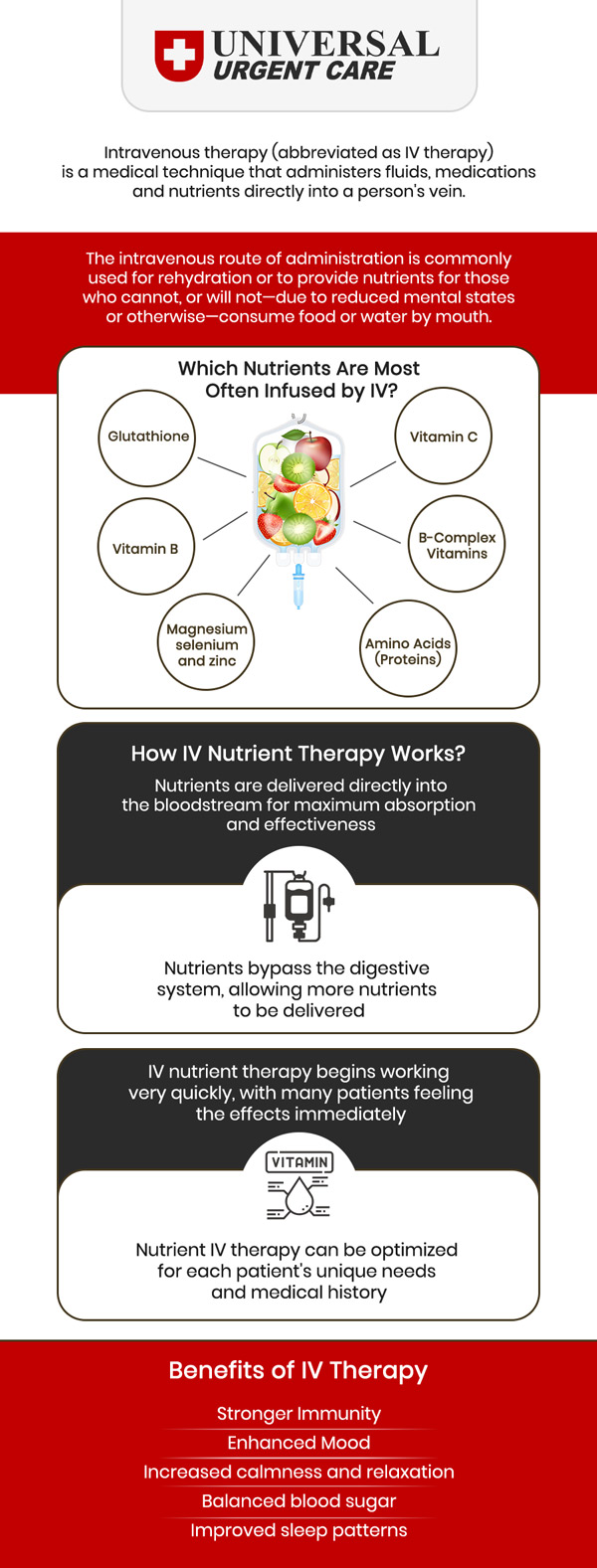
Table of Contents:
What health concerns may lead a medical professional to consider IV therapy?
Can IV therapy be considered when oral fluid intake is difficult?
What evaluation is completed before IV therapy is recommended?
Who may not be an appropriate candidate for IV therapy?
How is an IV therapy plan selected based on individual health needs?
How does Universal Urgent Care evaluate patients before providing IV therapy?
IV therapy may be considered when a person has lost more fluids than they can replace through normal drinking. This may occur with repeated vomiting, persistent diarrhea, fever, heavy sweating, heat exposure, or an illness that reduces appetite and fluid intake. Symptoms such as dizziness, dry mouth, weakness, reduced urination, or an elevated heart rate may suggest that further hydration assessment is needed.
A medical professional may also consider intravenous fluids when ongoing fluid losses make oral hydration insufficient or when dehydration is affecting circulation and daily functioning. IV therapy is not automatically necessary for every illness, and mild dehydration can often be managed with appropriate oral fluids. The decision depends on the cause, severity, symptoms, and ability to tolerate fluids safely.
At Universal Urgent Care, our team reviews the individual’s symptoms, recent fluid losses, medical history, and overall condition before deciding whether IV therapy may be suitable. Patients with severe confusion, fainting, breathing difficulty, chest pain, or signs of a serious medical emergency may require hospital-based evaluation instead.
IV therapy may be considered when nausea, vomiting, swallowing difficulties, significant weakness, or another health concern prevents a person from drinking enough fluid. Delivering fluid through a vein bypasses the digestive system, which may support hydration when liquids cannot be consumed or retained effectively.
Difficulty drinking does not always mean IV therapy is required. A medical professional first considers whether the person can tolerate small, frequent amounts of oral fluid and whether oral hydration is likely to replace the losses adequately. The severity of dehydration, duration of symptoms, urine output, vital signs, and continuing fluid loss can influence the recommendation.
At Universal Urgent Care, our team evaluates why oral fluid intake is difficult and whether intravenous hydration can be provided safely in an urgent care setting. We also assess for warning signs that may indicate the need for emergency testing, advanced monitoring, or treatment at a hospital.
Before recommending IV therapy, a medical professional generally asks about symptoms, recent vomiting or diarrhea, fever, food and fluid intake, urine output, and the duration of the illness. Medical history, current treatments, allergies, pregnancy status when relevant, and conditions affecting the heart, kidneys, or liver may also be reviewed.
The physical evaluation may include blood pressure, pulse, breathing rate, temperature, alertness, circulation, and signs of fluid loss or fluid retention. The clinician may assess the mouth, skin, swelling, capillary refill, and ability to stand or walk safely. Laboratory testing may be appropriate when electrolyte changes, kidney concerns, severe illness, or another underlying condition is suspected.
At Universal Urgent Care, our team uses the findings from this evaluation to determine whether IV therapy is appropriate, what level of monitoring is needed, and whether another form of care would be safer. This individualized process helps avoid unnecessary fluids and supports a treatment decision based on the patient’s current condition.
IV therapy may not be appropriate for someone who does not have a clear clinical need for intravenous fluids or who can safely restore hydration by drinking. Because IV placement carries risks such as bruising, infection, vein irritation, fluid leakage, and excessive fluid administration, expected benefits should outweigh potential concerns.
Additional caution may be required for individuals with heart failure, significant kidney impairment, liver disease, swelling, breathing problems, abnormal electrolyte levels, or a history of fluid overload. These conditions do not always prevent IV therapy, but they may require modified fluid amounts, laboratory testing, close monitoring, or treatment in a hospital.
At Universal Urgent Care, our team reviews medical history, symptoms, vital signs, and potential risk factors before proceeding. Patients whose condition cannot be safely evaluated or monitored in urgent care may be referred to an emergency department or another appropriate medical setting.
An IV therapy plan is selected according to why fluids are needed, the estimated degree of fluid loss, continuing symptoms, and the person’s ability to drink. Age, body size, blood pressure, urine output, underlying medical conditions, and possible electrolyte concerns may influence the amount and rate of fluid provided.
A medical professional also considers whether the goal is to replace a recent loss, support short-term hydration, or address a more urgent circulation concern. Fluid type, total volume, infusion speed, and monitoring requirements should be chosen individually rather than using the same approach for everyone. The person’s response should be reassessed during and after treatment.
Our team develops the IV therapy plan after completing a focused medical evaluation. We monitor comfort, vital signs, the IV site, and the patient’s response so that the plan can be adjusted or discontinued when clinically necessary.
An evaluation before IV therapy begins with understanding the patient’s primary concern and the events that may have caused fluid loss. Questions may address vomiting, diarrhea, fever, heat exposure, reduced intake, dizziness, weakness, urination patterns, symptom duration, and previous attempts to drink fluids.
The medical assessment may include vital signs, alertness, circulation, hydration indicators, swelling, breathing status, and relevant health history. Heart, kidney, and liver conditions are particularly important because they may affect how the body handles additional fluid. Testing may be considered when the symptoms suggest an electrolyte disturbance, kidney problem, or another condition requiring further investigation.
At Universal Urgent Care, our team combines these findings to determine whether IV therapy is medically appropriate and safe for the patient. We also identify symptoms that require a higher level of care and provide guidance on follow-up, oral hydration, and warning signs that should prompt immediate medical attention. For more information, contact us today or book an appointment. We are conveniently located at 2728 Ming Ave, Bakersfield, CA 93304. We serve patients from Bakersfield CA, Clovis CA, Mayfair CA, Kayandee CA, Arvin CA, Fairfax CA, Rosedale CA, and surrounding areas.
Check Out Our 5 Star Reviews



Additional Services You May Need
▸ Illnesses Treatment
▸ Diagnostic Tests
▸ X-Rays
▸ Immunizations
▸ Vaccination
▸ Cold or Flu
▸ Upper Respiratory Infection
▸ Ear Infections
▸ Sore Throat
▸ Urinary Tract Infection
▸ Sprains & Strains
▸ Sports Injuries
▸ Minor Eye Injuries
▸ Minor Burns
▸ Flu Shots
▸ Sports Physicals Exams
▸ School Physicals Exams
▸ DOT Physicals
▸ View All Services


 Send Text
 How May I Help You?