

Are Upper Respiratory Infections Contagious?
Upper respiratory infections (URIs) are highly contagious and can spread through droplets when an infected person coughs, sneezes, or talks. They can also be transmitted by touching surfaces contaminated with the virus and then touching your face. At Universal Urgent Care, our team can help diagnose and manage your symptoms while offering advice on how to reduce the risk of spreading the infection. Practicing good hygiene, such as frequent handwashing and covering your mouth when coughing, is crucial for preventing transmission to others. For more information, contact us or book an appointment online. We are conveniently located at 2121 Niles St, Bakersfield, CA 93305.
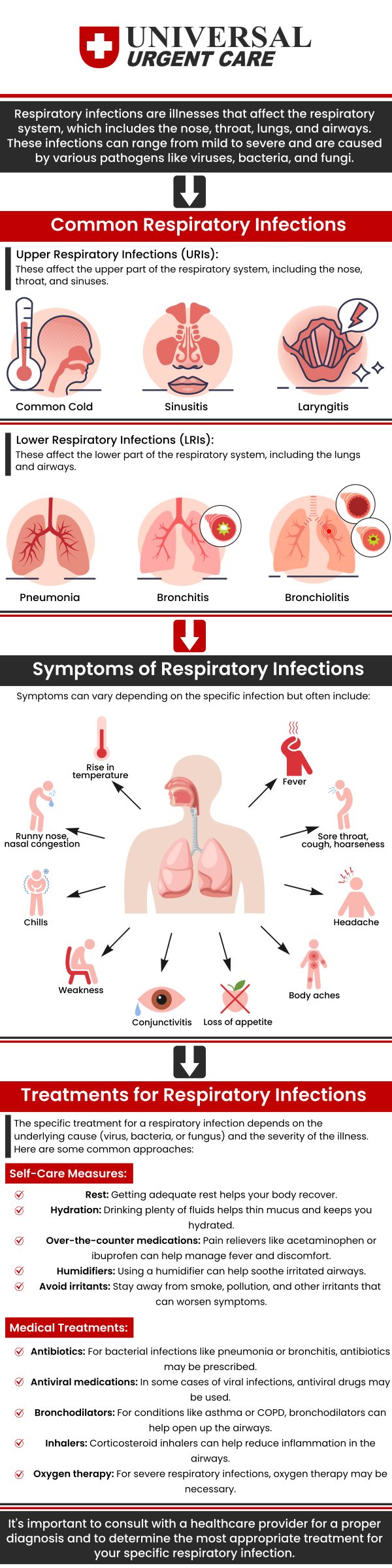
Table of Contents:
Can an upper respiratory infection spread through close contact?
How long is a person with a URI contagious?
Can I get an upper respiratory infection from a contaminated surface?
Can wearing a mask help prevent the spread of a URI?
Universal Urgent Care Discusses the Spread of Upper Respiratory Infections and Their Contagiousness
Upper respiratory infections (URIs)—including the common cold, influenza, and other viral or bacterial illnesses. These infections are highly contagious and can easily spread from person to person, especially through close contact.
When an individual with a URI coughs, sneezes, or even talks, tiny droplets containing viruses are released into the air. If you are nearby, breathing in these droplets can lead to infection. URIs can also spread when an infected person touches their mouth or nose and then contaminates surfaces like doorknobs, phones, or countertops. When someone else touches these surfaces and then touches their own face—especially the mouth, nose, or eyes—they may become infected as well.
The risk of catching a URI is higher in crowded or enclosed spaces, such as offices, schools, or public transportation, or when you are in close contact with someone who is ill—like family members or coworkers.
Most people with a URI are most contagious during the first two to three days after symptoms start, but you can still spread the virus before you even feel sick and for up to two weeks after becoming ill—especially if coughing and sneezing continue. The exact length of time you remain contagious can depend on the specific virus causing your infection.
As your symptoms begin to improve—and especially once you have been fever-free for at least 24 hours without using fever-reducing medicine—the risk of spreading the infection goes down.
To protect others, we recommend practicing good hand hygiene and covering your mouth and nose when coughing or sneezing. If you have questions about your symptoms or need care, the providers at Universal Urgent Care are here to help you feel better while keeping your community safe.
At Universal Urgent Care, we often get questions from our patients about how upper respiratory infections—like the common cold, flu, or certain viral and bacterial illnesses—are spread. While these infections are most commonly transmitted through respiratory droplets when an infected person coughs, sneezes, or talks, it’s important to know that contaminated surfaces can also play a role.
Viruses and bacteria can land on surfaces such as doorknobs, countertops, or cell phones. The chances of contracting an infection this way depend on the specific germ, how long it survives on surfaces, and your personal hand hygiene habits. For instance, viruses like rhinovirus (the common cold) and coronavirus can survive on surfaces for several hours, though their ability to cause infection decreases over time.
At Universal Urgent Care, we emphasize the importance of good hygiene to protect yourself and your family. Regular hand washing with soap and water, using hand sanitizer, disinfecting frequently touched surfaces, and avoiding touching your face can all significantly reduce your risk of catching or spreading an upper respiratory infection.
Masks serve as a physical barrier, reducing the transmission of respiratory droplets, which are the primary way many respiratory viruses spread from person to person.
When an infected individual coughs, sneezes, or speaks, tiny droplets containing viruses can be released into the air. These droplets can then be inhaled by others nearby. By wearing a mask over your nose and mouth, you help block these potentially infectious droplets, protecting both yourself and those around you.
The effectiveness of masks depends on the type of mask used, how well and consistently it is worn, and the environment. In high-risk settings—such as crowded indoor spaces, public transportation, or our urgent care clinic—masks are especially beneficial in minimizing the spread of URIs.
At Universal Urgent Care, we encourage patients and visitors to follow these preventive measures:
● Wear a well-fitting mask, especially if you have symptoms of a respiratory infection or are in a crowded or enclosed area.
● Practice good hand hygiene by washing hands regularly or using hand sanitizer.
● Maintain physical distance where possible.
● Stay home if you are feeling unwell to help protect others.
At Universal Urgent Care, we frequently see patients suffering from upper respiratory infections (URIs), including the common cold, influenza, sinus infections, and certain throat infections. These illnesses are among the most common reasons for urgent care visits in our community. Most URIs are caused by viruses such as rhinoviruses, coronaviruses, and respiratory syncytial virus (RSV), though some may be due to bacteria.
How URIs Spread in Our Community
URIs are highly contagious, which means they can spread quickly—especially in crowded settings such as schools, workplaces, and public spaces right here in our area. Transmission occurs mainly through tiny droplets expelled when an infected person coughs, sneezes, or talks. These droplets can be inhaled or can land on commonly touched surfaces like doorknobs, phones, and countertops in homes and public places.
When Are URIs Most Contagious?
People with URIs are usually most contagious in the first few days of illness, often even before symptoms start. That’s why Universal Urgent Care encourages everyone to practice good hygiene—frequent handwashing, covering your mouth and nose when sneezing or coughing, and staying home when you’re sick are key steps to prevent spreading these infections to others.
Recognizing Symptoms and When to Visit Universal Urgent Care
Common symptoms include a sore throat, runny or stuffy nose, cough, sneezing, and mild fever. If your symptoms become severe or do not improve after several days, it’s important to seek medical care. Complications like bronchitis or pneumonia, while uncommon, can occur—especially in young children, older adults, or those with underlying health conditions.
Our experienced team is ready to evaluate your symptoms, provide appropriate treatment, and offer guidance on how to manage your illness and prevent spreading it to others.
Prevention Tips:
● Wash your hands often with soap and water
● Disinfect frequently-touched surfaces at home and work
● Get vaccinated for influenza every year
● Maintain a healthy lifestyle to boost your immune system
● Avoid close contact with others if you are feeling unwell
If you have questions about upper respiratory infections, or if you or a family member is experiencing symptoms, Universal Urgent Care is here for you. We’re dedicated to keeping our community healthy and informed. For more information, contact us or book an appointment online. We are conveniently located at 2121 Niles St, Bakersfield, CA 93305. We serve patients from Bakersfield CA, Lakeview, East Niles, La Cresta, Maltha, San Lauren, Southgate, Oil Junction, Oil City and surrounding areas.
Check Out Our 5 Star Reviews



Additional Services You May Need
▸ Illnesses Treatment
▸ Diagnostic Tests
▸ X-Rays
▸ Immunizations
▸ Vaccination
▸ Cold or Flu
▸ Upper Respiratory Infection
▸ Ear Infections
▸ Sore Throat
▸ Urinary Tract Infection
▸ Sprains & Strains
▸ Sports Injuries
▸ Minor Eye Injuries
▸ Minor Burns
▸ Flu Shots
▸ Sports Physicals Exams
▸ School Physicals Exams
▸ DOT Physicals
▸ View All Services


 Send Text
 How May I Help You?